


 Home
HomeMIFIA Successfully Concludes Participation at the 139th Canton Fair: Introducing the Innovative Hole...
MIFIA is pleased to announce the successful conclusion of its participation in the 139th China Impor

PVC book covers play an essential role in protecting textbooks, notebooks, and reference materials used in schools, offices, and libraries worldwide. As one of the most widely used book cover materials, PVC is valued for its flexibility, waterproof performance, and long service life. However, these same material properties also make PVC highly sensitive during production.
For buyers sourcing PVC book covers in bulk, understanding how quality is controlled at the production stage is a key factor when evaluating suppliers.
Therefore, from a supplier’s technical perspective, quality control in PVC book cover manufacturing is not a single process but a system involving material handling, temperature management, and precise tooling decisions.
Before discussing specific quality control measures, it is important to understand the nature of PVC material itself. PVC is a flexible plastic that can be adjusted in softness, thickness, and transparency, making it suitable for many book cover styles. It fits closely to book surfaces, offers good protection, and supports a wide range of designs.
At the same time, PVC is highly sensitive to external conditions. Temperature, humidity, pressure, and production speed all directly affect its final performance. Small changes during processing can lead to visible defects once the product cools down or is stored.
Because of this sensitivity, PVC book covers require tighter process control compared with paper or PP alternatives. Experienced suppliers understand that stable quality depends on managing environmental variables throughout the entire production cycle rather than relying on fixed parameters.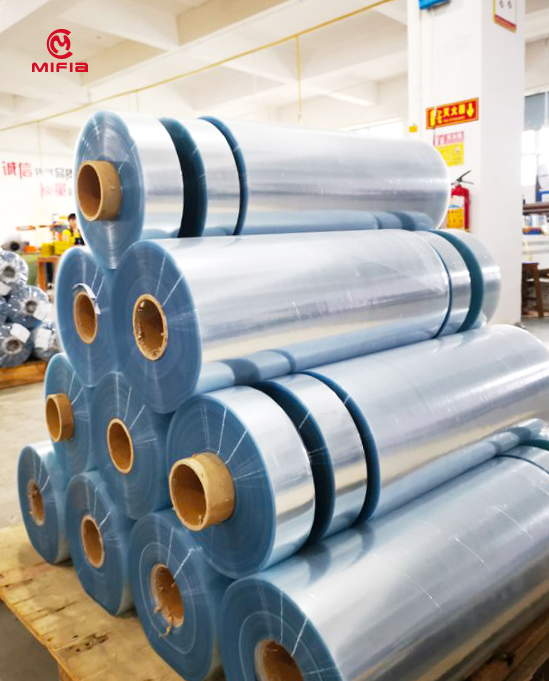
Among all production factors, temperature control is one of the most critical elements in PVC book cover manufacturing. Temperature directly affects PVC flexibility, shrinkage rate, and long-term shape stability.
Seasonal changes must be carefully considered. During winter, production temperatures are generally set higher to ensure the material reaches the required softness for forming. In contrast, summer production requires lower temperature settings to prevent excessive softening. Rainy or humid seasons may also require adjustments to maintain material consistency.
If temperature is not properly controlled, the finished book covers may shrink excessively once moved from a high-temperature production environment to a lower room temperature. This can result in covers that no longer fit books correctly or show curling and deformation over time.
To reduce these risks, professional manufacturers often use drying lamps or pre-shaping steps to stabilize the product before cooling. By allowing the PVC to set its shape gradually, suppliers can minimize sudden shrinkage and improve dimensional stability. This approach reflects a deep understanding of PVC behavior rather than short-term output efficiency.
In addition to temperature management, mold size control is another decisive factor in ensuring PVC book cover quality. Book sizes vary significantly between countries, regions, and even cities. A small size difference of just a few millimeters can affect the usability of a book cover.
For example, European markets may use multiple book formats that differ by as little as 2–5 mm. To produce a well-fitting PVC book cover, suppliers must understand local book size standards in advance. Simply copying standard molds without adjustment often leads to products that are either too tight or too loose.
Mold size decisions must account for several factors at the same time. These include the actual book dimensions, the expected shrinkage rate of the PVC material, the temperature during production, and the climate conditions in the customer’s local market. Ignoring any of these variables may result in size deviations after delivery.
Therefore, mold sizing is not a fixed calculation but an experience-based judgment. Skilled manufacturers evaluate material behavior and environmental conditions before finalizing mold dimensions. This process helps ensure that the finished PVC book covers maintain proper fit and appearance throughout storage, transport, and daily use.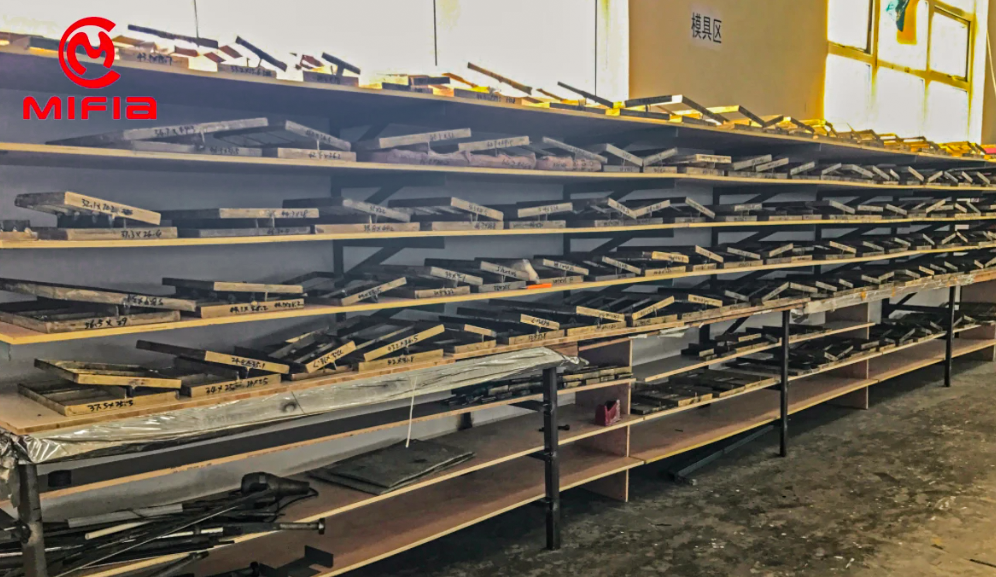
After temperature and mold size are properly managed, powder spray control becomes another key step in PVC book cover production. Powder is applied to raw PVC material to prevent sheets from sticking together during processing and stacking. While this step may seem minor, improper control can directly affect both product appearance and usability.
On one hand, insufficient powder application can cause book covers to stick together, making separation difficult during packing or use. On the other hand, excessive powder spraying can reduce transparency, making clear PVC book covers appear cloudy or dull. This negatively impacts visual quality, especially for transparent covers used in educational and retail markets.
Therefore, experienced manufacturers focus on achieving a precise balance. Powder quantity must be adjusted based on material thickness, surface finish, and environmental humidity. By maintaining controlled powder levels, suppliers can ensure smooth separation while preserving the clarity and aesthetic value expected by global buyers.
Following powder control, pressure regulation plays a crucial role in shaping PVC book covers. During production, pressure affects how cleanly edges are cut, how well seams are sealed, and how flat the final product appears.
If pressure is too high, the material may become over-pressed, leading to wrinkling, curling, or uneven surfaces. Such defects reduce both appearance quality and functional fit. Conversely, insufficient pressure can cause incomplete sealing, rough edges, or excess material remaining at corners, making the product look unfinished and prone to tearing.
Although most standard PVC book covers are produced using automated systems, pressure settings must still be carefully adjusted before mass production begins. Skilled operators test pressure levels in advance to ensure that the material responds correctly under current temperature and humidity conditions. This step helps guarantee stable output quality throughout large production runs.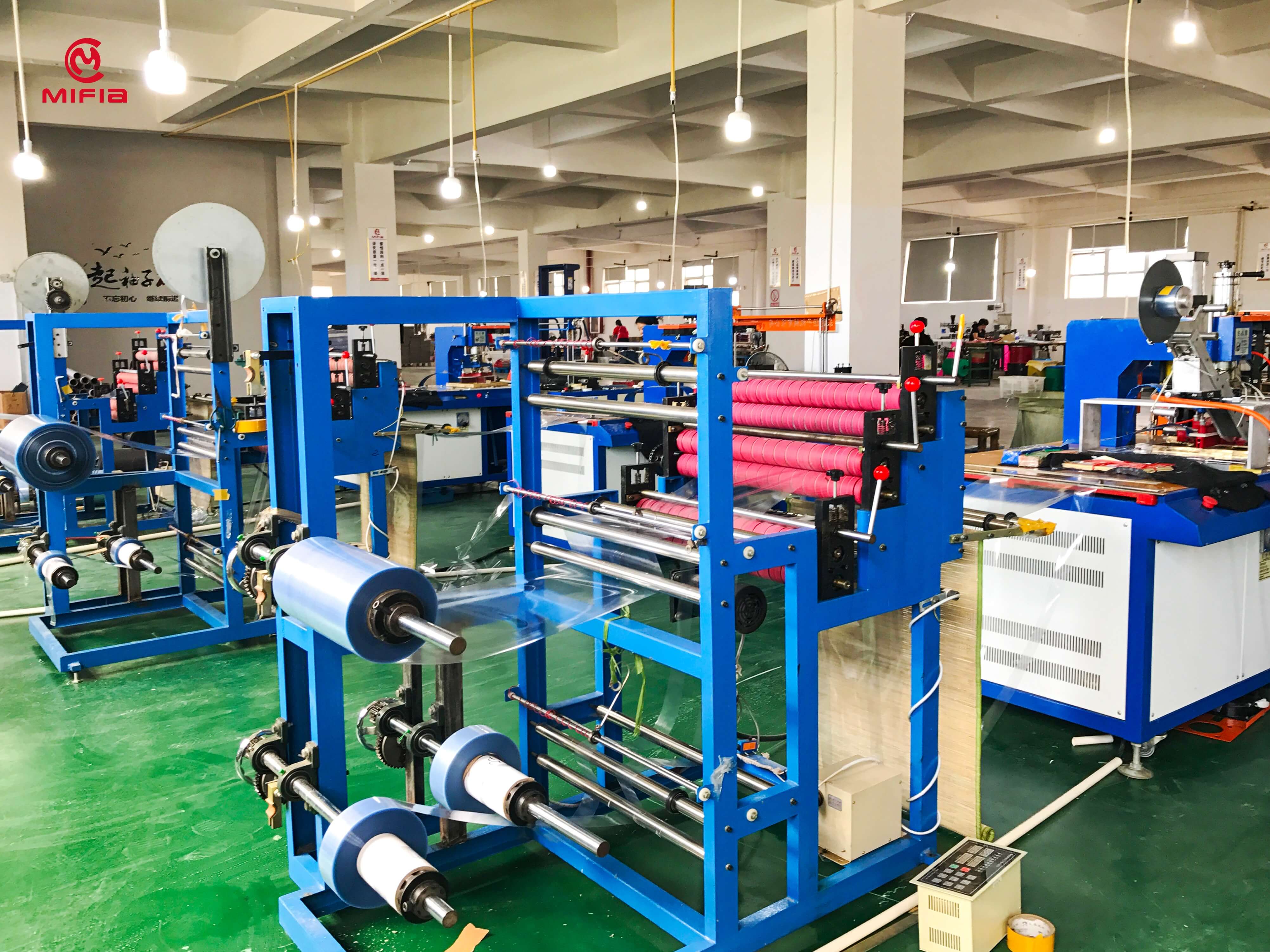
Another important quality control factor is film roll tension management. Wrinkling often occurs when the tension on both sides of the PVC film roll is uneven. This issue may not be visible immediately but can lead to permanent surface defects once the material is shaped.
To prevent this, manufacturers first select PVC film with consistent elasticity across the roll. Next, machine tension on both sides is carefully adjusted to maintain balance during feeding. This reduces stress on the material and helps keep surfaces smooth.
Additionally, during edge sealing, pressure and temperature must be coordinated with film tension. Proper film roll control ensures that book covers remain flat, wrinkle-free, and visually consistent, meeting the expectations of schools, wholesalers, and retailers.
As production moves toward finishing, labeling and positioning control becomes increasingly important. Many PVC book covers require labels for branding, size indication, or product identification. Incorrect label placement can result in large batches requiring rework, increasing cost and lead time.
When using automatic labeling machines, precise positioning must be confirmed before production starts. Once positioning is fixed correctly, automated systems can operate efficiently and consistently. However, if alignment is incorrect, errors may repeat across the entire batch.
Manual labeling may also be used for certain orders. In this case, operators must pay extra attention to alignment, as speed increases the risk of misplacement. Practical techniques such as guide marks on worktables help improve accuracy and reduce variation.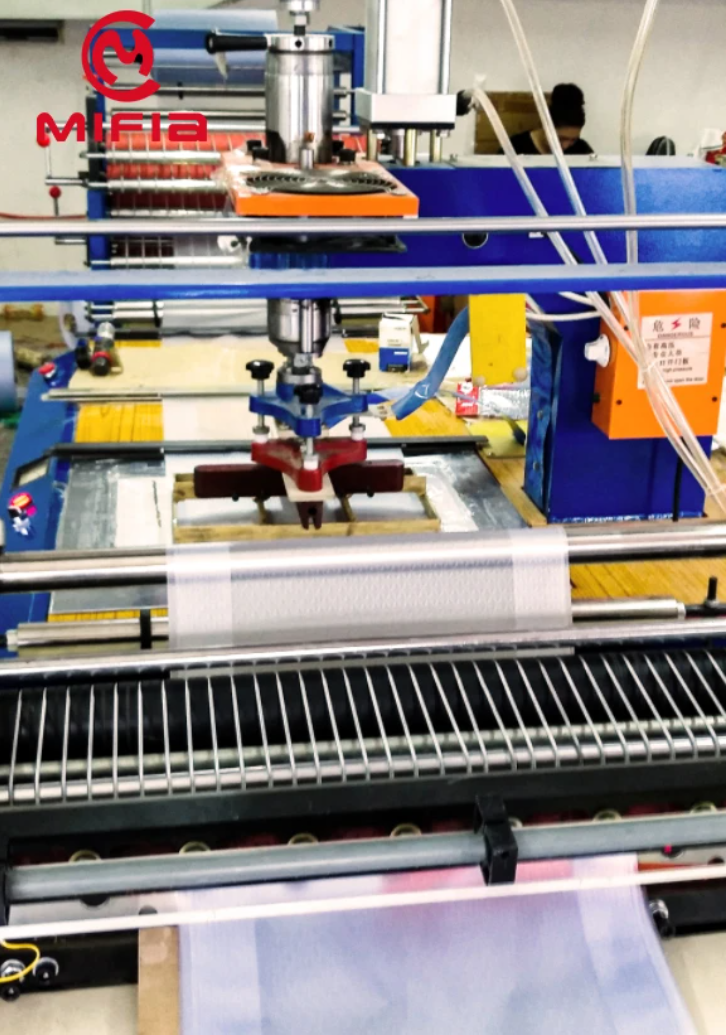
From powder spray control to final labeling, every step in PVC book cover production influences the quality of the finished product. Common market issues such as stickiness, wrinkling, size inconsistency, or visual defects are often the result of poor process control rather than material limitations.
For buyers, understanding these technical details provides valuable insight when selecting a supplier. A reliable manufacturer does not rely on fixed settings but adjusts production parameters based on season, material behavior, and target market requirements. This experience-driven approach is essential for delivering consistent, high-quality PVC book covers on a global scale.
As a professional stationery supplier, MIFIA focuses on stable production processes, precise quality control, and long-term cooperation with B2B partners worldwide. With strong manufacturing experience and strict operational standards, MIFIA supports importers, wholesalers, schools, and office suppliers with dependable PVC book cover solutions.
If you are looking for a trustworthy stationery supplier that understands both product quality and market needs, MIFIA is ready to support your business growth.

MIFIA is pleased to announce the successful conclusion of its participation in the 139th China Impor
Understanding the difference between ultrasonic welding and high-frequency welding helps wholesalers
In both school and travel environments, storage products are exposed to frequent handling, pressure,

MIFIA is participation in Ambiente 2026, from February 6 to February 10, 2026,Booth C26A, Hall 10.0.

How to Choose Custom Mesh Bags for Bulk Orders (Size, Material & Design Options)
How to Choose Custom Mesh Bags for Bulk Orders (Size, Material & Design Opti...

In today's dynamic business environment, effective organization is no longer a l...
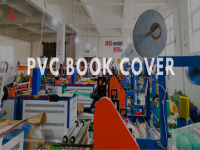
How to Control Quality in PVC Book Cover Production

Why Book Covers Matter for Long-Term Protection

How to Build an Efficient and Cost-Effective Purchasing System